Abstract Emergentism is a art form where a canvas is painted in layers until a image emerges. The layers are formed via primitive plastic elements which have thier roots in abstract expressionism, color field painting, lyrical abrstractionism and the Figurative Movement. Abstract emergentism is the opposite of painting theories based on reductionalism(breaking a subjective form into components, such as cubism). The term "Abstract Emergentism" is not in common usage, with the techniques and nomanclature being formed in contemporary discussions(such as this forum).
Historical Background
"Spring Floe" by Claude Monet's is a study of ice flows in along a river in France, which painting can be used to form a intuitve basis for understanding abrstract emergentism. In the late 1800's Monet in a series of studies, painted rivers which had frozen over in the winter, then durring the spring thaw, the ice sheets would break apart chaotically. The ice flows would often be colorful, with the spring sun reflecting off the ice chunks and compressing in drifts down the river. Monet's impression of the emergent properties in the ice flow are self evident, as the flat grey geometries transformed into colorful chaotic patterns in front of the artists eyes.
Fundamental aspects of abstract emergentism is base pre-geomertry ("grey" ice before it broke) chaotically and unpredictably emerged into color patterns. There is no way to predict the break up of the ice flow, since that is dependant on the weather(at a molecular level) and the sun(fusion of the hydrogen atom). At the time of the painting, chaotic system theory and quantum mechanics had not been invented, but at a primitive level Monet captured and enjoyed these advance mathematical concepts. In the same way, abstract emergentism is based on a sophisticated mathematical foundation, yet it's plasticity is primitive, allowing participation of the viewer at multiple levels.
Space & Color
From the senses, space can either be understood by sight or touch. With sight, space can be viewed as a distance between points. For touch, space is the tension between points. As it's fundamental model of plasticity, abstract emergentism uses "tension" as it's vehicle for space(see Mark Rothko's "The Artists Reality" for a in depth discussion on this topic).
So rather then thinking of space as distance, space is created by the tension of colors in abstract emergentism. The actual tension of a color in space is described across a color edge, which is called a qudge for short. One the color edge, one side of the edge has color, the other has not that color. A simple drip of black paint on a white canvas creates a edge of color that has tension. Wiping a single color on a canvas places tension on the canvas(especially if the canvas is vertical), since if a drip is placed on that canvas, it will modify the tension and perhaps the drip will run.
Thus abstract emergentism creates a pre-geometric space on a canvas using edges of color that have tension between themselves, where the artist and viewer merge into the space as they touch the painting in thier mind. This pre-geometric space is created in layers, called "color tensors" (rather then color fields), where complexes of pre-geometric spaces emerge into geometric spaces in the viewers mind. This platform being developed as a vehicle to allow sensual, spiritual and scientific thoughts to emerge within a painting.
Touch and Technique
In Abstract Emergentism the painters hand is put directly onto a pigment and the pigment flows from the hand to the canvas. Though non-primitive absract emergentism is possible, it would be better to classify that art form under other terms such as generative art. The primitivism of directly painting with the hands allows the artist and viewers minds merge in the painting, completing a reentrant cycle of touch and sight as layers of pigment are applied. Any technique which seperates the artist from the canvas is avoided.
Human fingers are remarkably adapt, and the apperent limitation of basically finger painting actually free's the artist to instantly explore techniques and thoughts, actually increasing creativity. Anciently finger painting was common, at some level most of the recent great abstract artist finger paint at one level or another(i.e. Pollock or De Kooning), and many fine artist smudge thier work to get effects such as reflection. But reallying completely on primitive techniques is uncommon in fine art painting, probably due to the historic problems of toxic materials in the paint, where it is only recent that acrylic paints with low toxicity are available.
Topology of Tension
Rather then thinking of starting a painting with a subject or concept, the painting can be started with a basic artistic topology of tension. If one thought of the differences beween touching the sky, the grass, a box or a woman. The tension of touching a lawn is different then the tension of touching a woman. And rather then thinking about specifically touching the single touching a instance of womans pose, think of generalizing the touching of a woman, as a single topological element in all it's forms. Thus starting a painting could be done as picking some topological elements, then having a instance of those elements emerge in the process of painting.
As an example, on the wiki page for Topology it shows a coffee cup and a doughnut shape transforming back and forth. Though a doughnet and a coffee cup instantiated are different, the topology of each allows a smooth transition(i.e. if one was a sculpture, you could smash a doughnut into a coffee cup shape without punching any holes in it). Rather then thinking of shape (topology) as the distance between points, if the topology was a representation of tension, though coffe cup's topology would not match a dougnut(press a doughnut your going to get some ickiness on your hand, press a coffee cup it's going to be hard art hot). But the concept of how a topology can a general toplogy can emerge into a recoganized instance is fundamental to color tensors and qudges(color edges). Thus the artist with a starting topology can have a infinite number of final paintings emerge, but that starting topology guides the painting like a the tensional theme in a play.
By starting a painting as a topology rather then a scene one is trying to copy, the painter has started a play within the painting. The play emerges as the painter interacts with tensor fields, and the obsver is drawn into the painting emotionally and spacially looking at a finished piece. Thus standard concepts of form and subject may be involved in emergentism, those forms are generalized into topologies, which are starting points for creative exploration of the artist and the observer.
Webmaster Notes(pat@patrickfaith.com):
I'm looking for someone to integrate Abstract Emergentism into the wiki page, probably should follow the link on field color painting. Note also, I find the entire figurative movement on Wiki perty light, and am also looking for jpeg's I can use for the Abstract Emergentism page. I also I seperated Abstract Emergentism from Generated art, since to me AE's core is human interaction directly to the pigments, but thematically they are related(who knows how to catagorize things ... ).
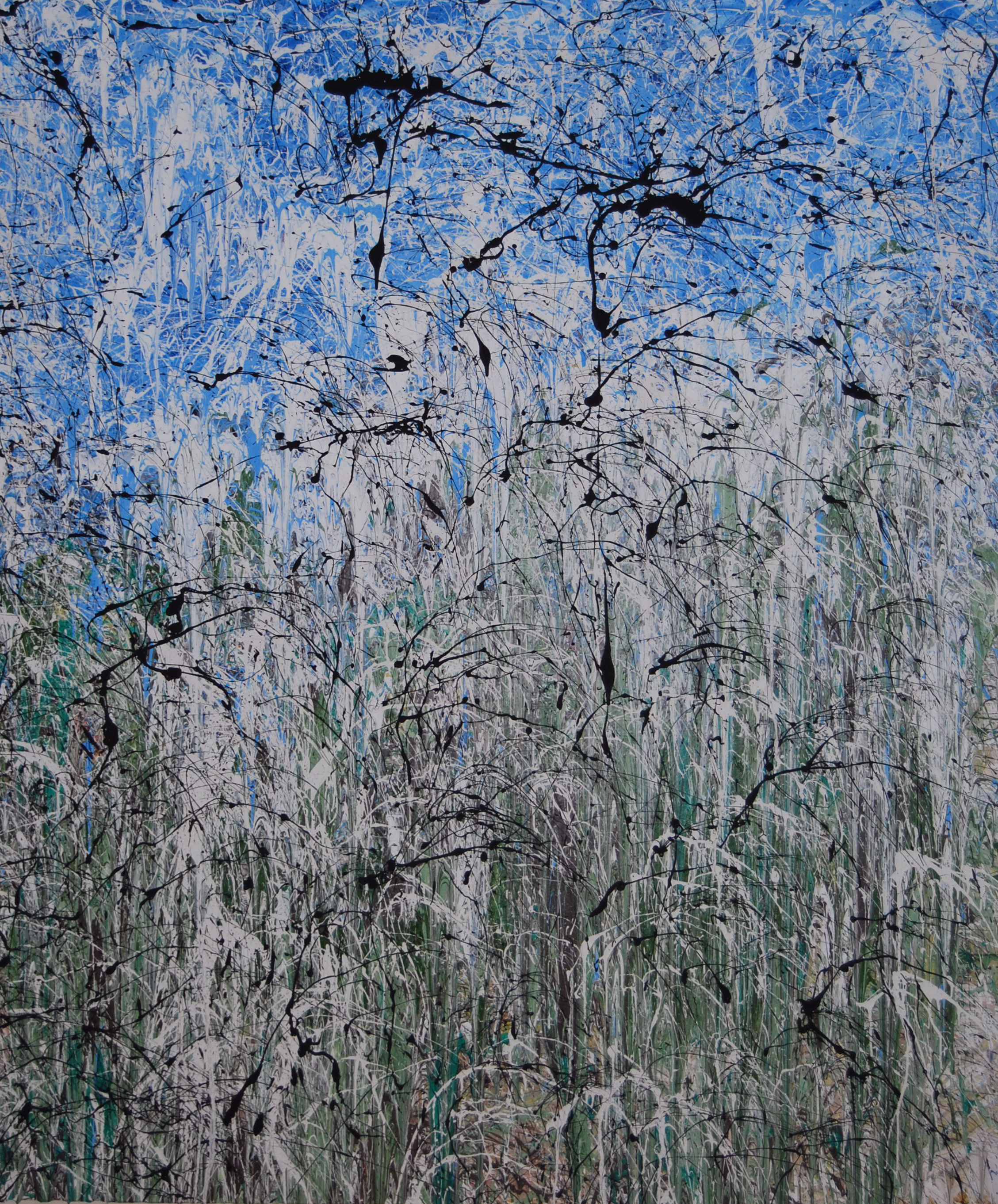 Abstract Emergentism is a art form where a canvas is painted in layers until a image emerges. The layers are formed via primitive plastic elements which have thier roots in abstract expressionism, color field painting, lyrical abrstractionism and the Figurative Movement. Abstract emergentism is the opposite of painting theories based on reductionalism(breaking a subjective form into components, such as cubism). The term "Abstract Emergentism" is not in common usage, with the techniques and nomanclature being formed in contemporary discussions(such as this forum).